Category Archives: Butter and Egg

Flea Market-Inspired Spring

Inspiration and beauty are all around. For many, Spring is a season of sun-dappled sidewalks and flea-market weekends. Of exploring shapes and colors which take their cues from nature, history, and the whimsy of a flowing line. It’s the season of looking around with fresh eyes.

Slow News Day: Are the French Losing their Cheese Edge?

While some American farmers are just discovering the joys and products of old-fashioned, methodical cheesemaking — employing ones own cows, sheep and goats — some in France are rigthfully worried that that country is losing its traditional methods, along with some of its long-time producers. One family that has been making cheese since Charlemagne’s 9th century rule, is in its last generation of cheesemakers.

Blame increasing globalization of both palate and distribution. Near-ubiquitous use of pasteurization has also moved the French away from unique raw-milk cheeses and toward blander packaged fare. As a result, the very people who coined the term terroir (meaning that the food reflects the region in which it was produced, say as a result of specific grass munched by local cows) are in danger of losing their most unique geographically-based cheeses.

Why should we care? If you love cheese, of course, you likely treasure the small-batch, hand-made varieties from the farmer’s own hands and farm. They’re more special and rare; they taste more distinct, reflecting the land and the care — sometimes two years of processing and storing — that went into them. This trend extends beyond cheese, of course, and represents a loss of long-time tradition and craftsmanship as well as a diminishment in the appreciation of a fine product, which leads to the demise of that product itself. Remember when cars were more stylish? Clothing better made?

This fine article explains the cheese situation in more depth.

The only thing one can do on this (or any) side of the pond? Gather up a good French cheese, like the Comte Les Trois Comptois (a nutty, floral raw milk gruyere), a sturdy baguette, and a bottle of wine, and do your part to keep unique, terroir French cheeses alive.

Photos: Keith Weller, Susan Sachs Lipman

Celebrate National Strawberry Ice Cream Day

January 15 is National Strawberry Ice Cream Day. Why not enjoy some strawberry ice cream? According to Ice Cream Journal, the earliest ice cream flavors were vanilla-based with fruit mixed in. An early adapter of this was Maryland Governor Thomas Bladen who, in 1744, began serving strawberry ice cream to dignitaries and guests.

There are tales of ice cream coming to us from ancient Rome and China, but Zinger’s page on ice cream history dates the creamy concoction to 1600s England.

Probably like you, I had no idea there were so many official U.S. food holidays. I found this food holiday calendar, along with another list of national food holidays. Food holidays, recipes and food trivia also abound on a fun blog called Foodimentary. So, not to worry, if you’re reading this late. There is probably still time to catch National Fig Newton Day.

Photo: Public Domain

12 Days of Green Holiday Gifts: Homemade Cookies

Cookies might be the ultimate green and well-received gift — They’re delightful, yummy and fun. They come from the heart. They’re economical. Making and exchanging them can be a fun holiday tradition. And you can always make a few extra for yourself.

This week I had the pleasure of attending a cookie exchange! Lucky me (and my family.) Each year the women who volunteer to help with my local Girl Scout group have an exchange in which attendees bring 4 dozen cookies and an empty container. The cookies all go out on a table, and we line up (Girl Scout volunteers are orderly) and go around the table, socializing and taking a cookie from each plate until they are all distributed. (A photo from the exchange is above.)

There are several cookies that have become part of our holiday baking traditions. I usually manage to make a couple of types each year. They happen to be easy to make. Here are the favorites.

Spritz Cookies


I grew up making these. In fact, my mom really enjoyed making Spritz cookies and Halloween cupcakes. A certain whiff from an electric beater (she had a great, big Hamilton Beach one that was permanently on the counter) takes me right back to childhood winters and falls.

Spritz cookies are made by pressing the soft dough through a cookie press and through various plates with interchangeable shapes. I love the efficiency and fun of pressing out lots of little cookies. Once pressed onto a cookie sheet, you can decorate them with the sprinkles of your choice. I think one of the keys to good Spritz cookies is: Be sure your recipe includes almond flavoring (or add 1/2 tsp. per 4-5 cups of dry ingredients, or half as much as your vanilla flavoring). The other is: Have fun decorating. This can be a very festive and delicious cookie. If you do color the cookies (which I recommend!) you might want to try professional paste frosting colors, which, with a little patience, produce a nice deep color. (You can get a box of 8 small color jars from ChefMaster, available at specialty baking stores, for around $7).

It also takes a little practice to learn to press the right amount of dough out per cookie. (Most presses have adjustable settings.) The good news is you can just scoop dough that didn’t work out back into the press and try again.

This site, from Wilton, offers the classic Spritz recipe, plus links for buying a cookie press. I recommend the reasonably priced Cookie Max.

Butterballs

You may know them as Mexican Wedding Balls, or Russian Tea Cookies. Butterballs are mine (and a lot of people’s) favorite cookie — They’re tasty, melt-in-your-mouth buttery, sugar-coated, and just all-around great, any time of year. I find the ones in The Silver Palate Cookbook to be the best of the best, perhaps because they’re largely sweetened with honey, which provides a great taste and crunch.

Here is a copy of the recipe, from The Silver Palate Cookbook.

Sugarplums


One more from the Silver Palate team — This one is in The Silver Palate Good Times Cookbook: Sugarplums. Mythical, festive, evocative Sugarplums. (Blame it on The Nutcracker and The Night Before Christmas.) They are certainly as much fun to pop into one’s mouth as they are to contemplate. The original recipe calls for corn syrup and cognac. I substituted agave syrup, a mild and more natural sweetener for half the corn syrup, and all of the cognac (using a little under 1/3 c. for the cognac portion.) And I did away with the cherry on top, the better to enjoy the pure, undiluted Sugarplum experience.

Enjoy!

My criteria for a green holiday gift? Items meet all or most of the following: Promotes nature play or care of the earth, Uses all or mostly natural ingredients, Fosters hours of open-ended creative play,  Doesn’t use extraneous plastic or other wrapping, Doesn’t break the bank to buy it.

Photos by Susan Sachs Lipman

Heed the Call of the Pumpkin: Great Bay Area Pumpkin Farms

pumpkinfield2

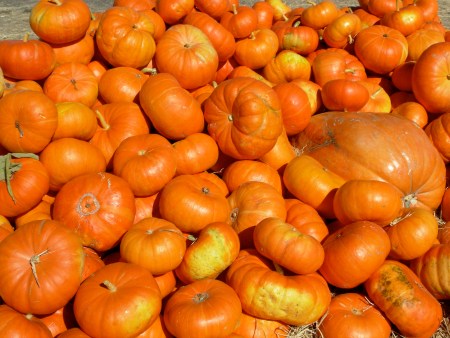
Few people can resist the delights offered by a pumpkin farm. They’re wonderful places for urban and suburban families to slow down just enough to feel the turning of the year and maybe try some harvest or other activities from times past. And, of course, there are the pumpkins themselves — jolly orbs that lay in profusion among pastures until you, the visitor, pick the most perfect among them to take home.

With Halloween almost upon us, most pumpkin farms have gone into high gear, with lots of activities over longer hours, and a host of pumpkins still available for the picking. Included in this listing are working farms and special pumpkin patches in the North, East and South Bays.

pumpkinvine

North Bay

Peterson’s Pumpkins and Dried Flowers, Petaluma

This working farm opens to the public for Halloween. Families may visit on weekends or after 2 on weekdays. In addition to two large, natural pumpkin fields, Peterson’s has lots of animals to feed and pet, including chickens, ducks, geese, turkeys, cows, ponies, rabbits, pigs, calves, and a very big but gentle bull known as Wooly Monster. There are also fresh vegetables, flowers, free-range eggs, and an observational bee hive, all in a very intimate farm setting.

See the Peterson’s web site for directions and more information.

Peter Pumpkin Patch, Petaluma

This large, beautifully situated pumpkin farm in the Chileno Valley is also the home of Spring Hill Jersey Cheese. Visitors can milk a cow or dig for potatoes in a potato field, in addition to buying some of the best homemade ice cream around (pumpkin and vanilla) and specialty  farmstead cheeses.

See the Peter Pumpkin Patch web site for directions and more information.

Adobe Pumpkin and Flower Farm

This 30-acre farm has thousands of pumpkins and gourds for the picking, along with U-cut zinnias and sunflowers, and vegetables. Adobe also has a great corn maze, a hay ride, a haunted barn, a jump house, animals, crafts, and food and live entertainment on weekends.

See the Adobe Farms web site for directions and more information.

Nicasio Valley Farms, Nicasio

Along with a large, picturesque pumpkin field, Nicasio Valley Farms offers U-pick strawberries, lots of gourds, and a farmstand featuring a complete array of fresh organic vegetables, as well as eggs, breads and cheeses. There is a hay ride, a hay maze and a jump house.

Call Nicasio Valley Farms at (415) 662-9100 for directions and more information.

pumpkinsign

East Bay

Smith Family Farm, Brentwood

Smith Family Farm has been in the same family for three generations and offers lots of great old-time activities on its large farm. There’s a leisurely tractor-pulled hay ride out to the pumpkin field, a corn maze, a hay maze, displays of antique farm equipment, live entertainment in a barn, a host of animals, and lots of fresh U-pick produce. The farm offers lots of places to picnic and play in a large, varied ranch setting.

See the Smith Valley Farm web site for directions and more information.

Clayton Valley Pumpkin Farm, Clayton

Clayton Valley Pumpkin Farm, at the base of Mount Diablo, features a large variety of pumpkins and squash in all shapes and even colors. This working farm offers lots of fun activities for all ages, including a trackless train, a playland featuring old-fashioned games, and plenty of farm animals. The farm represents a part of the area’s rural past that is largely disappearing.

See the Clayton Valley Farm web site for directions and more information.

Joan’s Farm and Pumpkin Patch, Livermore

This large, pretty working farm offers a taste of the Old West: There’s an Old West town, gold panning, antique farm equipment, a museum, and more. There’s also a large corn maze, hay rides, farm animals, and a farmstand with fresh produce for sale.

See the Joan’s Farm web site for directions and more information.
pumpkins

South Bay

Half Moon Bay bills itself as the “Pumpkin Capitol of the World” for good reason. Many people know about its yearly Art and Pumpkin Festival, which occurs each year in mid-October. Less well-known is the bounty of area farms, many of which have been in families for generations, along Highways 1 and 92.

Farmer John’s Pumpkin Farm, Half Moon Bay

This delightful pumpkin patch offers an extremely large variety of pumpkins, all grown on-site. This working farm also features a hay pyramid, scarecrows, play areas, a Native American tipi, cornrows, U-pick sunflowers, and an antique John Deere tractor. The farm is wheelchair-accessible.

See the Farmer John’s Pumpkin Farm web site for directions and more information.

Arata’s Pumpkin Farm, Half Moon Bay

Open since 1932, Arata’s is one of the oldest working pumpkin farms in the Bay Area. In addition to pumpkins, enjoy pony rides, animals, a hay ride, and a huge hay maze — clearly a labor of love — constructed out of 10,000 bales of hay.

See the Arata’s Pumpkin Farm web site for directions and more information.

Little Creek Ranch Pumpkin Farm, Half Moon Bay

Just up the road from Arata’s, Little Creek is a delightful family farm and pumpkin patch suitable for very young children. Pumpkins lay far apart on flat ground, so there are no vines to trip over. The entire pumpkin area is surrounded by low hay bales. There is a play structure and pony rides, along with other animals.

Call Little Creek Ranch at  (650) 726-2765 for directions and more information.

Pastorino Farms, Half Moon Bay

Pastorino Farms dates from the 30s and is known today for its huge assortment of pumpkins, along with its big orange-and-black decorated barn. Pastorino offers train rides around a small track, a jump house, pony rides, and a petting zoo. Hand-made signs that identify the many different types of pumpkins, some of them quite unusual. Also nice is the farm’s large selection of Halloween decorations and kitchen wares.

See the Pastorino Farms web site for directions and more information.

Lemos Farm, Half Moon Bay

A working farm since 1942, this popular, charming spot offers lots of activities for all ages, especially young children. In addition to a good selection of pumpkins, Lemos Farm features pony rides, hay rides, a hay maze, a train for small children, a toddler-oriented play zone, haunted houses for older and younger children, and animals you can feed and pet. Lemos Farm retains a great deal of charm from the South Bay’s rural past.

See the Lemos Farm web site for directions and more information.

Have fun!

pumpkinantique

Pumpkinbarn

sunflowers

annapumpkin

Photos by Susan Sachs Lipman

Sonoma County Farm Trails Weekend

littlelamb

As if we needed another excuse to get out and enjoy early Fall, September 26-27 is Weekend Along Farm Trails in Sonoma.

Sonoma County Farm Trails is a wonderful group. For 36 years, it has supported sustainable agriculture and provided education and tons of fun, with maps to and information about participating farms that are open to visitors. My family has visited farms for years, in all seasons — picking berries, apples, pumpkins, and zinnias; buying fresh vegetables, honey and eggs; feeding llamas, rabbits, chickens and cows; even making butter and milking cows, the last of which visitors can do at McClelland’s Dairy in Petaluma. Wineries, plant nurseries and restaurants are also on the tour.

We saw this newborn calf on one of our farm visits:

calf

It’s just enjoyable to drive along the farm roads from one farm to another. Often, farms are closed to visitors during a typical day, or are only open by appointment. So it’s especially fun when they throw the gates open on Farm Trails Weekend, and you can really go into the many different farms and experience feeding animals, learning about the harvest, meeting farmers, participating in chores, and otherwise enjoying a taste of farm life. You can even get a jump on selecting a pumpkin. Some farms offer hay rides and other activities.

See the Weekend Along Farm Trails site to map your route and plan your visit. You’ll probably want to visit farms that are clustered in one or two areas and plan about an hour per farm visit, or 3-5 farms in a day. Have fun!

(If your area has a similar farm day, let us know.)

sunflowers

Photos by Susan Sachs Lipman

Make this Honey Spice Cake for a Sweet New Year and Fall

depotpumpkin

Honey is one of the world’s oldest foods. Ancient Egyptian tomb reliefs from as far back as the 3rd millennium B.C. show bees being smoked from their hives to produce it. Nomads and traders helped honey’s popularity spread worldwide, while it remained a prevalent sweetener in the Middle East, where it still often, and wonderfully, appears in Mediterranean, Arab and Jewish dishes.

Jews around the world traditionally celebrate their new year by dipping apples in honey, and by eating honey and spice cakes, the better to usher in a “sweet new year.”

And lots of people ring in the fall by making honeyed cakes of wonderful harvest ingredients like pumpkin, and warm spices like cinnamon, cardamom, and cloves.

This terrific and tasty honeyed spice cake recipe recently appeared in the San Francisco Chronicle, just in time for our good friend and fabulous cook Sandy Waks to try it out for a Jewish New Year gathering last week. It was very meaningful to slow down and gather around her table, which brimmed with fresh, often biblical, foods — Sandy’s also a fantastic gardener — and warm, interesting company, and to stop and give thanks and blessings for the new year.

Of course, a year, or even a season, needn’t be starting to make this cake. I intend to make it many times this fall. Dense cakes like this one pack well for school lunches and other times, are loaded with healthy ingredients, and just taste yummy.

Photo by Susan Sachs Lipman: Pumpkin spice cake at the Mill Valley Book Depot

Be a Farmer for a Day at McClelland’s Dairy in Petaluma

Friesian-Holstein

When Anna was small, she used to love both to go for drives and to look at cows. The 45-minute drive from our house to McClelland’s Dairy in Petaluma also happened to provide the perfect mid-day nap time. So it was that we took plenty of drives to McClelland’s, to watch the cows being milked in the dairy barn.

Now you can do this, too, even without the nap.

If you’ve ever wondered what it’s like to be a farmer, or if you just want to spend the day on a pretty farm, enjoying farm life,  McClelland’s Dairy in Petaluma is offering families and others that chance, with a special day filled with activities at their family dairy farm.

Participants will start with morning chores — feeding the baby calves from bottles in the nursery, mixing grain for the “mama” cows, and then milking cows, with one-on-one instruction from the farmers. You can sign up for a guided tour, where you’ll learn the history of the multi-generation family farm as well as more about the nursery and cow-milking barn. You can also experience making your own butter from milk.

There are lunches for sale, or bring your own and picnic at the farm.

McClelland’s “From She to Thee Farm Days” will take place Sat.-Sun., September 5-6 and September 26-27.

For more info about events, pricing, and the farm, see: The McClelland’s Dairy Farm web site.

Photo by Keith Weller

Slow News Day: Rogue Creamery in SF Chronicle

rogueblues2

Oregon’s Rogue Creamery and its award-winning Rogue River Blue Cheese just got mentioned in Janet Fletcher’s wonderful cheese column in the San Francisco Chronicle. She also noted Cowgirl Creamery‘s Red Hawk Cheese, which took second place overall in the recent American Cheese Society competition and has won Best of Show in the past.

In addition to the traditional dairy states — Wisconsin, California, Vermont, New York  — that are associated with award-winning cheese, Fletcher noted that ACS ribbons were spread around to some relative newcomer states, like Colorado, Indiana, Iowa, Maine, Massachusetts, Michigan, Missouri, Texas and Utah. Good news for U.S. cheese production (and enjoyment)? One can only hope.

Rogue Creamery’s Blue Wins Top Cheese Prize

It would be achievement enough to be crowned Best Blue Cheese, but the Rogue River Blue from Rogue Creamery in Oregon did even better, winning Best of Show at the 26th annual American Cheese Society competition, which was held recently in Austin, TX. The blue cheese beat an astonishing 1,326 other entries in what is often billed as “the Super Bowl of cheese”.

Cowgirl Creamery, in Point Reyes, CA, took Second Place in the competition, for its superb Red Hawk washed-rind cheese.

rogue1

rogueblues2

Days before the win, we visited Rogue Creamery in Central Point, OR, on our return from our road trip between San Francisco and Portland. We got a chance to chat with talented and passionate cheesemonger Tom Von Voorhees and to taste tons of special, hand-recommended cheeses.

rogue5

The blues were indeed a highlight, and we had many generous samples. Choosing a favorite was immediately impossible — it was always the last cheese tasted. The Oregon Blue, made with raw milk, was robust, bright and creamy, with lots of wonderful classic roquefort taste. The Oregonzola was also very tasty and had a harder texture. If pressed, I’d say my favorite was the Crater Lake Blue, which was very creamy, with an even stronger and more complex blue flavor than the others.

They’ve all won their share of awards.

rogue15

The new Caveman Blue, below, was also outstanding and flavorful and extremely creamy.

rogue6

Along with the cheese tastes, we enjoyed splendid Carpenter Hill wine from the nearby Carpenter Hill Vineyard. We especially liked the Tango Red, a warm, fruity mix of merlot and cabernet, and bought some to take home. Syrah leaves from Carpenter Hill are used to wrap the Rogue River Blue for aging up to one year. Lee Mankin from Carpenter Hill explained how the Syrah leaves are macerated in Clear Creek Pear Brandy made from locally picked pears, so that the cheese is a complete example of local terroir. We moved to the cheese counter, where we got talking to Tom about all things life and cheese, and we never tasted the ACS award winner! Based on the array of Rogue Creamery blues, it has to be terrific. I can’t wait to try it.

rogue8

We first tried the 4-year Noordhollander Gouda, which offered an extremely tasty mix of caramel sweetness and tangy bite, along with a wonderfully rich, crunchy texture.

rogue11

We really enjoyed Pholia Farm’s Pleasant Creek and Covered Bridge goat cheeses, which are made locally in Rogue River, OR. Both had a superb, strong goat taste and, were we not traveling by car in a heat wave, we would have picked up a bunch. If you are lucky enough to live near Pholia Farm, they offer farm tours and cheesemaking classes.

rogue12

From the Willamette Valley Cheese Co. in Salem, OR, comes this Perrydale cheese, a cow/sheep mix that was wonderfully sweet and delicately fruity.

rogue13

We were very impressed with this raw-milk Emmenthaler from Edelweiss Creamery in Wisconsin. It had a terrific taste and is made the traditional way in huge copper vats.

rogue14

I must mention that Rogue Creamery is also known for its cheddars. I was personally nearing my limit — Yes, there is one — so I didn’t cheddar up, but here’s a sampling, along with Rogue’s famous curds, which are very good, and the Caveman Blue.

rogue4

rogue10

We snapped up some curds and the hardest (hardiest) cheese for the journey, along with some Rustic Bakery crackers, which come from our home county of Marin. They are extremely tasty. We first encountered them at a local Wine and Gourmet event, and fell in love. Rustic’s flatbreads were originally created specifically to compliment the complex cheeses being produced by artisan creameries.

rogue16

rogue7

Rogue Creamery was started in the 1930s by Tom Vella, of Sonoma, CA’s Vella cheesemaking family. He learned blue-cheese-making techniques in Roquefort, France, and in 1957, produced the first cave-aged Blue Cheese west of the Missouri River.

rogue2

rogue3

I was very enamored with both the creamery and the picturesque Rogue River Valley and plan to return to sample other local artisan foods. Congratulations again, Rogue Creamery, on your most impressive win.

Photos by Susan Sachs Lipman

Related Posts Plugin for WordPress, Blogger...