Tag Archives: Food

Egg Dyeing Workshop

A few days ago, I posted about the tradition of dyeing, giving and celebrating with eggs for Easter and spring. Today I got to attend a lovely workshop, where we dyed eggs with plant dyes, in the Mill Valley store Maison Reve, under the guidance of Molly de Vries. It was a lot of fun and wonderful to gather with neighbors of all ages to enjoy a time-honored art. Egg dyeing is easy, inexpensive, creative and limitless. I enjoyed seeing everyone’s decorating ideas and techniques.

The plant dyes had been created in advance using onion skin, turmeric, cabbage, and beets.

Molly also provided tape, string, crayons, and beeswax, so people could create designs on their eggs, which would often show up white after the eggs absorbed the dye. (For complete dyeing instructions, see my earlier post.)

I used beeswax to make little dots, which I put all over the egg before soaking it in the onion skin dye for about 40 minutes.

I had help removing the wax, to reveal the white of the eggshell (and a little wax, which the group liked) underneath.

Happy Easter and Spring.

Photos by Susan Sachs Lipman

Read Part 1: Dye Eggs Like the Ancients with Plant Dyes

Mixed Reviews for New Necco Sweetheart Flavors

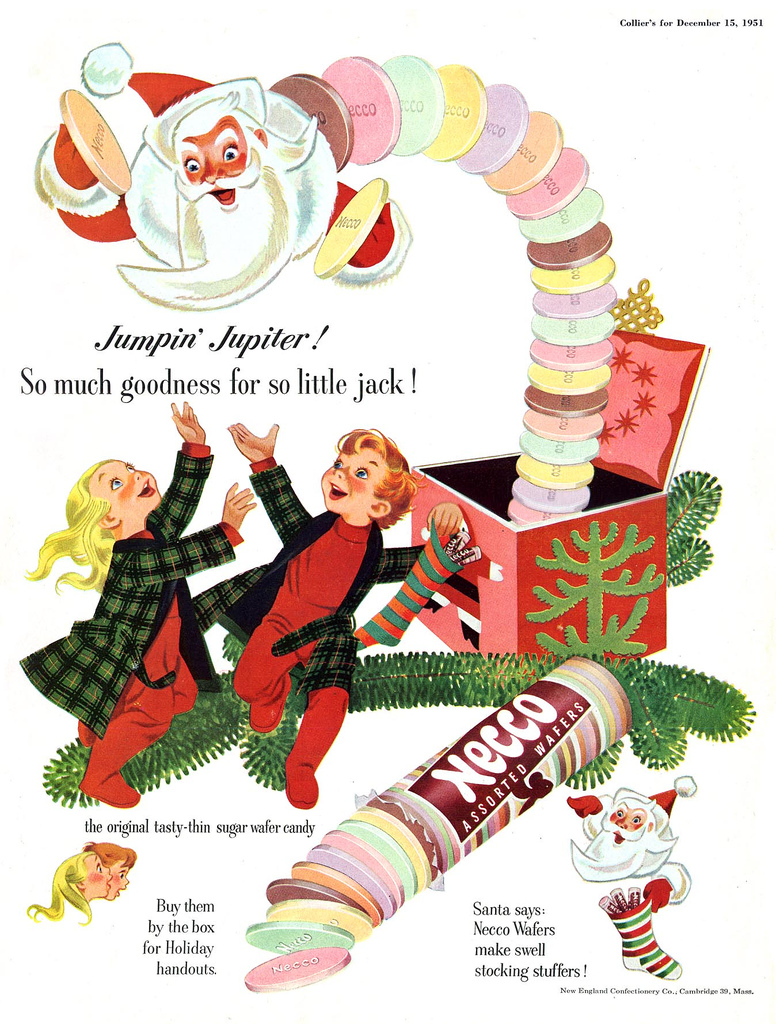
I admit I was a little (okay, a lot) worried when I read that one of my favorite childhood candies, Necco wafers and sweethearts, was being reformulated after a whopping 163 years of tradition and success. Necco wafers were good enough to accompany two explorers on their expeditions (Admiral Byrd’s to the South Pole and Donald MacMillan’s to the Arctic) as well as feed the WWII troops, plus they featured the most wonderful iconic bright colors and flavors — Why would the company want to mess with that?

Mostly, as it turns out, to replace artificial ingredients with natural ones, an endeavor it’s hard to argue with. According to the Necco site, the roll contains the same flavors it always did:  Orange, Lemon, Chocolate, Clove, Cinnamon, Wintergreen and Licorice. Artificial ingredients have been replaced with natural flavors and colors from red beets, purple cabbage, turmeric and cocoa powder.

A panel of adult and teen tasters assembled by Slow Family Online tasted the company’s Sweethearts in preparation for Valentine’s Day. The group applauded the inclusion of natural over artificial ingredients and even liked the new, slightly softer, texture of the candies. While some of the new flavors were fine, others didn’t fare as well in the transfer and we bemoaned their loss.

The group found Purple (grape) to retain the most classic Necco flavor. The grape flavor is actually a little more pronounced than it was before. We all continue to like Orange (color and flavor), a favorite, which is definitely more citrus-y than its predecessor. The Green (green apple) has a new flavor, instead of its traditional, vaguely lime one, which I had really liked. Like the Purple, it retains the Necco chalky quality we like. The apple flavor got mixed reviews. I found it somewhat cloying. Light blue (blue raspberry) is brand new, in flavor and color. It’s a bit sugary tasting, but then the tartness of the raspberry comes on. This one could grow on me, despite the additional strange newness of its color. My daughter was particularly disappointed with Yellow (lemon), which she says used to have a more banana flavor. I was particularly let down with Pink (strawberry). Gone is the classic, nostalgic, unclassifiable Necco pink flavor. In its place is the much too bright strawberry.

I’m glad to report that the bright colors definitely remain intact. I’ve watched the sayings get updated over the years, as new ones like FAX ME and E MAIL ME came on. This year brings TWEET ME as an addition to classics like SOUL MATE, SWEET PEA, SAY YES, and ALL MINE. The Necco Sweetheart page tells us that all the previous sayings were scrapped to make way for sayings that were voted on by the public. I’m glad, then, that the voters thought to include LOVE YOU along with U R HOT.

Sweethearts are the top-selling nonchocolate Valentine’s Day candy. 6 billion little Sweethearts are produced each year. They’re so successful that they are now going to be produced for occasions other than Valentine’s Day. You’ll soon see Sweethearts with sayings targeted to the Twilight vampire book series, as well as a patriotic line.

I’m eager to try a Necco wafer roll next. I’m looking forward to Chocolate I remember. They wouldn’t mess with that, would they?

Happy Valentine’s Day!

Photos: Necco

Bonus Trivia Question: What does Necco stand for?

Answer: New England Confectionary Company

Slow News Day: Are the French Losing their Cheese Edge?

While some American farmers are just discovering the joys and products of old-fashioned, methodical cheesemaking — employing ones own cows, sheep and goats — some in France are rigthfully worried that that country is losing its traditional methods, along with some of its long-time producers. One family that has been making cheese since Charlemagne’s 9th century rule, is in its last generation of cheesemakers.

Blame increasing globalization of both palate and distribution. Near-ubiquitous use of pasteurization has also moved the French away from unique raw-milk cheeses and toward blander packaged fare. As a result, the very people who coined the term terroir (meaning that the food reflects the region in which it was produced, say as a result of specific grass munched by local cows) are in danger of losing their most unique geographically-based cheeses.

Why should we care? If you love cheese, of course, you likely treasure the small-batch, hand-made varieties from the farmer’s own hands and farm. They’re more special and rare; they taste more distinct, reflecting the land and the care — sometimes two years of processing and storing — that went into them. This trend extends beyond cheese, of course, and represents a loss of long-time tradition and craftsmanship as well as a diminishment in the appreciation of a fine product, which leads to the demise of that product itself. Remember when cars were more stylish? Clothing better made?

This fine article explains the cheese situation in more depth.

The only thing one can do on this (or any) side of the pond? Gather up a good French cheese, like the Comte Les Trois Comptois (a nutty, floral raw milk gruyere), a sturdy baguette, and a bottle of wine, and do your part to keep unique, terroir French cheeses alive.

Photos: Keith Weller, Susan Sachs Lipman

Slow News Day: Michelle Obama – First Gardener, Foodie, Childrens Health Advocate

flotus_garden1_blog

This has been a big year for the Slow Food movement, with some high-profile help from First Lady Michelle Obama.

In June, the Obama White House broke ground for its organic kitchen garden (involving local schoolchildren in the process), the first White House vegetable garden since Eleanor Roosevelt’s Victory Garden in the 1940s.

I wrote about it on Slow Family Online, in a story about the bumper crop of home gardeners.

The above picture of First Lady Michelle Obama and children in the garden appeared in the White House blog. Food from the garden is feeding the White House, as well as homeless recipients at Washington, D.C.’s Miriam’s Kitchen.

The blog, Eat The View, offers an entertaining round-up of the White House Garden, and other Edible Landscape campaigns.

In September, the First Lady went a step further, inaugurating the first ever weekly farmers market on the White House lawn, allowing visitors the opportunity to purchase fresh food directly from the farmers who grew it. Agriculture Secretary Tom Vilsack was on hand for the opening, and he spoke about the importance of eating fresh, locally-grown food.

Says Mother Earth News:

The White House farmers market serves as a symbol to the rest of the United States that the current administration is supportive of small food producers and sustainable, healthy food systems.

The 2009 White House Farmers Market ran through October and will resume again in the spring.

This week, Michelle Obama decided to raise awareness of the importance of fresh, healthy food another way — by announcing a campaign aimed at curbing childhood obesity. She told the U.S. Conference of Mayors, “Obesity in this country is nothing less than a public health crisis” and said that healthier habits were imperative to the next generation of children. In addition, they needn’t be expensive to undertake. Her campaign will include specific programs like improved school lunches.

You might want to visit Slow Food USA for more information on the Time for Lunch Campaign to improve school lunches.

If you are remotely a foodie or White House follower, you will want to follow the Obama Foodarama blog, which keeps up with both. Given the Obama White House’s emphasis on fresh food and good health, there is certain to be no shortage of news.

Photos: The White House/Joyce N. Boghosian, AP/Manuel Balce Ceneta. Art: National War Garden Commission/US Department of Agriculture, 1917-19.

Celebrate National Strawberry Ice Cream Day

January 15 is National Strawberry Ice Cream Day. Why not enjoy some strawberry ice cream? According to Ice Cream Journal, the earliest ice cream flavors were vanilla-based with fruit mixed in. An early adapter of this was Maryland Governor Thomas Bladen who, in 1744, began serving strawberry ice cream to dignitaries and guests.

There are tales of ice cream coming to us from ancient Rome and China, but Zinger’s page on ice cream history dates the creamy concoction to 1600s England.

Probably like you, I had no idea there were so many official U.S. food holidays. I found this food holiday calendar, along with another list of national food holidays. Food holidays, recipes and food trivia also abound on a fun blog called Foodimentary. So, not to worry, if you’re reading this late. There is probably still time to catch National Fig Newton Day.

Photo: Public Domain

12 Days of Green Holiday Gifts: Books for Adults

The Gift of an Ordinary Day: A Mother’s Memoir, by Katrina Kenison, is a refreshingly honest book in which Kenison re-counts finding herself, at roughly middle age, as her children grow older and gain independence, and the author’s family transitions from an urban to a more rural, and slower, lifestyle. The book’s intimate (but not overly revealing) anecdotes and observations unfold in a way that creates the feeling that one is reading letters from a good friend.

Liza Dalby’s East Wind Melts the Ice: A Memoir Through the Seasons is an extremely special book that I find myself dipping into throughout the year. Dalby, who has spent a great deal of time in Japan and is the author of Geisha and other books, as well as a passionate gardener, weaves together observations about various topics — gardening and the natural world, poetry, eastern and western cultures, gender identity, life with small children — and she does so by structuring the book according to the 72 seasonal units of the ancient Chinese almanac. Each piece is beautiful in itself and delightful to read, as well as often quite insightful, funny or deep. Perhaps, as with the Kenison book, the best memoirs (and this is one, although it’s so quirky and brightly observed that “memoir” doesn’t quite do it justice) make you yearn to be the author’s friend or over-the-fence neighbor, or at least sit down for some tea.

Earth to Table: Seasonal Recipes from an Organic Farm, by Jeff Crump and Bettina Schormann, stands out among this year’s crop of farm-to-table cookbooks. This is a stunningly photographed book that focuses on eating locally and in tune with the seasons. The recipes feel as fresh as the food pictured. Crump is a Canadian Slow Food pioneer and chef, and Schormann is a pastry chef, and the resulting book is enriched with their experiences in restaurants and in organic farming.

Every project in Betz White and John Gruen’s Sewing Green: 25 Projects Made With Repurposed and Organic Materials is adorable, colorful, and fun, and contains simple step-by-step instructions that a novice fabric crafter can follow. Best is the inspiration that comes from seeing all these ideas for repurposing and recreating with materials you may already have on hand or could easily locate. The book also contains a very thorough resource list. It’s a guaranteed winner for someone who’s interested in fabric crafting, especially one on the hunt for easy, do-able ideas.

You could do no wrong with any title by Rachel Carson, the pioneering environmental writer whose work managed to infuse the modern environmental movement, as well as educate and inspire wonder about all aspects of the natural world.  Her 1951 classic, The Sea Around Us, is a fine place to introduce a reader to Carson, or to simply experience her lustrous prose as she describes the awe-inspiring, continually mysterious world of the oceans, their history, their habitat, and the special place where water and land meet. The new edition contains added material by marine biologists about the deterioration of the oceans and their life, as well as some prescriptive ideas for its greater care.

My criteria for a green holiday gift? Items meet all or most of the following: Promotes nature play or care of the earth, Uses all or mostly natural ingredients, Fosters hours of open-ended creative play,  Doesn’t use extraneous plastic or other wrapping, Doesn’t break the bank to buy it.

Let Nature Decorate your Holiday Table

Nature often makes the best decoration. Especially in Fall, leaves, fruits and nuts are readily available in public spaces, in addition to being eye-catching, pretty, and free or nearly so.

Of course, the hunt is a highlight of the pre-planning. It provides a fun family tradition, and a way to enjoy nature together in the beautiful Fall, before bringing some of it inside for lovely — and free — table decor. My favorite tabletop finds include buckeyes, chestnuts, multi-colored leaves, ivy, pine boughs, pine cones, branches with berries and, from the store, mini pumpkins, persimmons, apples, mandarin oranges, and pears.

Above are fall tables from two different years. Both feature collected items from nature and inexpensive store-bought fall flowers that my family and I arranged in a shallow bowl, using a “frog” to hold the stems in place. All of our glassware and china has been handed down, including the festive red glasses. I layered inexpensive tablecloths and fabric runners.

One Thanksgiving morning, our cousins gathered branches and boughs for their table and made cute homemade placecards for each guest.

Another guest provided this very festive and yummy cake. I made the Cranberry Crunch squares from Susan Simon’s The Nantucket Holiday Table. They’re very good, and a great use for cranberries.

If you’re fortunate to be able to collect buckeyes, chestnuts or acorns in your area, they can make an inexpensive, natural, interesting filler for a large vase of flowers.

Friend Mary Mauro cleverly filled a very tall vase with mini pumpkins for a gathering. (She is also a gifted flower arranger.)

I hope you have an inspired, happy Thanksgiving.

Photos by Susan Sachs Lipman

Stir up (or Cook Down) some Colonial Apple Butter

applebutter1

In a world of wonderful jams and butters, apple butter might just be the ultimate slow food. Comprised of just a few natural ingredients, and no white sugar, the best apple butter cooks most of the day over a low flame, so that the resulting mixture is wonderfully dense and has a rich, caramel-y taste. I’d been wanting to get in touch with my inner Colonial cook and make some, when a neighbor happened to bring over a bounty of Fuji apples from her backyard tree.

applebutter7

Apples were indeed plentiful in Colonial America. Alice Morse Earle’s book, Home Life in Colonial America, lists such dishes as apple-slump (baked apples under a cake topping), apple-crowdy (a turnover-like dessert), and something called apple-mose, along with various types of pies. The book quotes a Swedish parson writing home about the Delaware settlement in 1758:

Apple-pie is used throughout the whole year, and when fresh apples are no longer to be had, dried ones are used. It is the evening meal of children. House-pie .. is made of apples neither peeled nor freed from their cores, and its crust is not broken if a wagon wheel goes over it.

applebutter2

I washed the Fuji apples, appreciating their pretty shapes and colors. In Colonial country homes, it was not uncommon to hold an apple-paring, in which friends and neighbors came to help peel the crop of apples for winter’s dried apples, applesauce and apple butter. The ingredients for apple butter were put into large brass kettles, which were then hung in big, open fireplaces. The finished apple butter would be stored in barrels in the house’s basement. Quince and pear butters were made as well.

applebutter4

My apple butter is extremely easy to make, requiring only the ingredients you see above:

8 cups apples (a cup is approx. 2 small apples)

2 1/2 cups apple cider

1 Tbsp. honey

1 tsp. cinnamon

1/2 tsp. cloves

This recipe yields 2 jars of apple butter and can easily be doubled or tripled. I arrived at it through a combination of various vintage, Amish, and canning books, along with some trial and error.

applebutter3

1. Wash, peel and chop the apples into small pieces.

2. Place the apples into a large pot and cover with the cider.

applebutter5

3. Bring mixture to a boil, then reduce heat to a low simmer.

4. Add remaining ingredients and stir to combine.

applebutter6

5. Simmer on low heat, uncovered for 6 or more hours, or until the mixture cooks down to a paste. You may opt for occasional periods of slightly higher heat, if you find that your mixture remains too watery or if you want to caramelize some of the apples at the bottom of the pot.

This is the “inner Colonial” part — the long, slow cooking process and the fantastic way your house will smell and feel as you do it.

applebutter10

6. Using a wide-mouth funnel, ladle the mixture into jars that have been prepared for canning. (I boil them for 10 minutes in a boiling water canner.)

7. Seal the jars and boil them again, for 10 minutes. Let them sit for a day. (If you follow strict canning guidelines, you can store your apple butter for the future. If you do not, then you’ll want to eat the apple butter within a couple of weeks and store it in the refrigerator.) Please refer to the USDA canning guidelines, downloadable Guide 1,  for more information on proper home canning.

applebutter9

Preserves and butters of all kinds make wonderful gifts and spreads, especially one like this, in which there is barely anything to get in the way of the wonderful, fresh, age-old  Fall apple taste. Try apple butter on toast or crackers, with cheese, poultry, or even other fruit.

Photos by Susan Sachs Lipman

Quince Dubbed “Poster Child of Slowness”

quince by 4028mdk09

Folks in various Slow Food circles are suddenly rallying around the quince, which I featured on my site just a week ago.

Possibly with us since Biblical times, the quince was traded at middle eastern crossroads before making its way around the Mediterranean and across the Atlantic to Thomas Jefferson’s garden, only to become relatively neglected in more recent eras.

That seems to have changed, as the somewhat homely fruit has recently become the improbable star of cookbooks, restaurants, and home cooks.

Ben Watson, an author and food activist with Slow Food USA, proclaimed, “The quince is the poster child of Slowness. It’s lovely and fragrant but pretty much inedible unless transformed by peeling, coring and cooking. I think it is poised for a comeback.”

Watson has been involved with Slow Food’s Ark of Taste project, which is an extremely exciting effort to catalog and promote all kinds of delicious foods that are in danger of extinction as we move toward mass production of fewer varieties of foods. I urge you to visit the Ark of Taste web site to see tantalizing photos and learn about wonderful heirloom fruits and other foods, and where to find them.

More on quince’s comeback, history and harvesting can be found in this delightful Los Angeles Times piece.

Also just in, courtesy of Food News Journal: “French foodie Stevie Parle turns to Provence for a perfect quince crumble.” This from the Guardian. (His crumble actually looks and sounds to me like a crisp, which coincidentally is my favorite dessert. I’ll have to try to make some!)

Quinces Ag Research

Walt Whitman’s Ode to the Harvest

fallgrape18

The peak of the harvest, at once miraculous and commonplace, calls for nothing less than an ode by one of America’s most enthusiastic and passionate chroniclers of the everyday, Walt Whitman. Whitman lived through most of the 19th century, in eastern and midwestern America, and his walks and observations survive through a series of moving and life-affirming poems.

fallgrape13

fallgrape2

As I turned to the Japanese haiku masters to help honor the turning of summer to fall, I turn now to Walt Whitman to give voice to the harvest and those who work tirelessly, often against time and weather, to glean it.

fallgrape7

This Whitman poem is called The Return of the Heroes — fittingly, I think, as those who work the soil and care for animals to provide food for themselves and others are often humble heroes. The poem is accompanied by photos I took over the last couple of weeks in the vineyards of Napa Valley, CA, as the wineries prepare for their harvest, or crush.

fallgrape8

The Return of the Heroes

(also known as A Carol of Harvest)

For the lands and for these passionate days and for myself,
Now I awhile retire to thee O soil of Autumn fields,
Reclining on thy breast, giving myself to thee,
Answering the pulses of thy sane and equable heart,
Tuning a verse for thee.

O earth that hast no voice, confide to me a voice,
O harvest of my lands — O boundless summer growths,
O lavish brown parturient earth — O infinite teeming womb,
A song to narrate thee.

All gather and all harvest ..

Harvest the wheat of Ohio, Illinois, Wisconsin, every barbed spear under thee,
Harvest the maize of Missouri, Kentucky, Tennessee, each ear in its light-green sheath,
Gather the hay to myriad mows in the odorous tranquil barns,
Oats to their bins, the white potato, the buckwheat of Michigan, to theirs;
Gather the cotton in Mississippi or Alabama, dig and hoard
The golden sweet potato of Georgia and the Carolinas,
Clip the wool of California or Pennsylvania,
Cut the flax in the Middle States, or hemp or tobacco in the Borders,
Pick the pea and the bean, or pull apples from the trees or bunches of grapes from the vines,
Or aught that ripens in all these States or North or South,
Under the beaming sun and under thee.

— Walt Whitman

From Leaves of Grass

fallgrape14

fallgrape19

Photos by Susan Sachs Lipman

Related Posts Plugin for WordPress, Blogger...