Category Archives: The Great Outdoors

Join the Great American Backyard Campout June 22

The Great American Backyard Campout is Saturday, June 22. According to sponsors National Wildlife Federation, people register to camp outside June 22, or a night of their choice. You can register at the NWF site, which provides a Campsite Finder full of opportunities to join an existing camping team. Or you can join the Campout in your own backyard, balcony, or local campground. National Wildlife Federation hopes that the Campout will inspire more people to get outdoors and experience the ease and fun of enjoying a beautiful outdoor place and sleeping under the stars.

That’s what happened with me last year, when I was fortunate to join a Campout group at Lake Berryessa in Northern California. We fished and floated in the lake during the day, and sang songs, made s’mores and watched the impressive canopy of stars at night. Many people were camping for the first time with their families. Everyone had a blast.

Me and my camping buds:

You may know that we sometimes pitch a tent on our deck or in a treehouse. Kari of Active Kids Club shares her tale of Balcony Camping in an urban backyard.

Debi at Go Explore Nature offers tons of outdoor activities to add to the fun while camping, like a Flashlight Walk or a Bug Hunt.

Looking for more fun things to do outdoors? Try these Seven Things to Do After Dark from National Wildlife Federation.

Here are more Camping Tips, games, songs and recipes from NWF.

Of course, no camping outing is complete without s’mores, the gooey outdoor treat that first appeared in the 1927 Girl Scout Handbook, Tramping and Trailing with the Girl Scouts, which coincided with the beginning of mass-produced graham crackers and chocolate bars.

See my S’more Recipes.

Enjoy your time outdoors!

Photos: Susan Sachs Lipman


It’s National Pollinator Week: Have Fun Attracting and Helping Bees, Butterflies and Birds

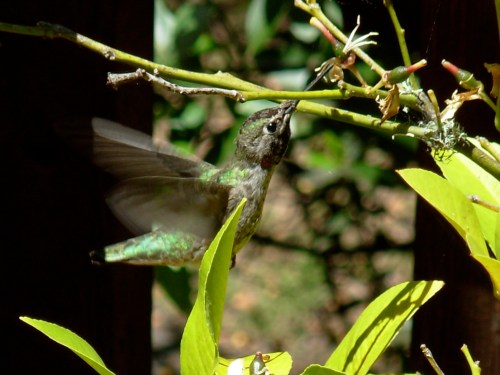
June 17-23 is National Pollinator Week. It’s a week to celebrate and educate about pollinating animals, such as bees, birds, butterflies, bats, beetles and others, which are extremely vital to our ecosystem. Pollinators support much of our wildlife, lands and watersheds. Nearly 80% 0f the 1,400 crop plants grown around the world that produce all of our food and plant-based industrial products require pollination by animals.

There are so many simple ways to welcome pollinators into our home gardens and other outdoor spaces. In addition to helping the earth’s ecosystem and food supply, you’ll also experience the fascination and wonder that comes from observing the animals you attract. Here are a few ways to get more involved:

Find or add an event through Pollinator Partnership, a wonderful resource about pollinators year-round.

Garden for wildlife with tons of tips and guides from the National Wildlife Federation, which offers a Certified Backyard Habitat Program.

Check out NWF gardeners’ favorite plants for attracting pollinators.

Find more information about gardening for wildlife from the U.S. Fish and Wildlife Service.

Join the Great Sunflower Project and many other citizen science projects that allow you to help researchers right from your own backyard or a local park.

Spring at the Bird Cafe and bird feeder activity.

Make a quick and easy bird feeder to attract and observe birds.

Enjoy beautiful nature during Pollinator Week and throughout the year!

Photos: Susan Sachs Lipman, Public Domain

Tidepooling with Kids: The Best Ways and Places to Explore Undersea Creatures

The undersea world is always fun to explore at low tide, when creatures like barnacles, crabs, periwinkles, and sea stars, who are normally underwater, become revealed. This summer, those of us on the North American coasts are in store for a great show, as there will be some very low tides, or minus tides, at times of the day and year when we can get out and enjoy them. My home, San Francisco Bay, will enjoy minus tides this June 9-13 and June 23-27. Check one of the tide tables below for tides in your area.

How do Tides Work?

Tides are influenced by the moon, whose gravity pulls at the oceans each day as the Earth completes its daily spin. That pull creates a high tide at the portion of the Earth where it occurs. Most places experience two high tides each day. The second one occurs when the moon’s gravity pulls on the spot exactly opposite it on the Earth. (The second high tide is usually not as high as the first high tide.) Low tides occur when the moon is first rising in the east, or setting in the west, and the strong pull is happening elsewhere. Full or new moons usually create higher high tides and lower low tides than moons in other phases.

tidepool2

Reading a Tide Table

Tides are relatively predictable, but not entirely, as they can be altered by factors like temperature, air pressure, storms, and wind. A tide table is like a forecast, as opposed to a rigid schedule. That said, tide tables are usually fairly accurate. Most tide tables read in military time (a 24-hour clock), rather than using a.m. and p.m. Tides are measured in feet, so a 2.0 tide means that the water is two feet high.

The intertidal zone, which is what you’ll be exploring, is the area that is revealed during a low tide and covered during a high tide. You can begin to see some creatures in this area when the tide is as low as 1.5, but your best bet for seeing a show is to visit when the tide is listed as a “minus tide”, which is an especially low tide. Try to time your visit to arrive before the time listed, so you catch the tide going out. Generally it goes out (becomes lower) for about two hours, and comes back in for an hour and a half, so that’s the window of time for the visit. You need to be aware of the time and the tides, especially if the beach you’re exploring is one that can become cut off from access during high tides, or is known for tides that rise quickly. (The best beaches for exploring intertidal life with children have easy access, even during high tides, and are not known for large waves or drastic changes. That said, visitors still have to be aware of the tides and the time.)

These are some fairly accessible tide tables:

U.S. East and West Coast tide table, search by state

San Francisco Bay Area tide table

There are others online, and others that can be purchased at bookstores and marine-supply stores in calendar form.

Be sure to follow any links to the adjusted times for different spots up and down the coasts, as the tide times change based on exactly where the tide hits.

tidepool

Who Lives in the Intertidal Zone?

When the tide retreats, sea creatures can be seen clinging to, or underneath, rocks. These animals, as well as intertidal plants, are especially adaptable to their changing conditions. They are often also colorful and unusual. The animals you will likely see include limpets, which stick to rocks high in the intertidal zone, and their relatives, the chitons. Children may identify periwinkles, which have a snail-shaped shell, and tough barnacles, which cling to rocks and other surfaces. You may see sculpins, which are tiny fish, moving in the extremely shallow pools, or prickly sea urchins, or everyone’s favorite, the many kinds of starfish (sea stars). There will likely be many types of crawling crab. And you’ll probably also see anemones, which open and close around food, or a gently placed finger, and which squirt a bit when touched.

The best way to identify these various creatures is to pick up a field guide to local sea life at a bookstore or library. Some places also sell easy-to-reference cards that can be worn around the neck, saving you from fumbling with a book while out along the shore.

tidepool3

12 GREAT Tidepool Spots

Some of the largest of these feature more than one great tidepooling beach.

Cabrillo National Monument, San Diego, CA

Leo Carillo State Park, Malibu, CA

Morro Bay, CA

Pillar Point Harbor, Half Moon Bay, CA

Fitzgerald Marine Reserve, Moss Beach, CA

Duxbury Reef, Bolinas, CA

Yaquina Head Outstanding Natural Area, Newport, OR

Olympic National Park, Olympic Peninsula, WA

Kapoho Tide Pools, Big Island, HI

Bahia Honda State Park, Bahia Honda, FL

Hunting Island State Park, Beaufort, SC

Acadia National Park, Bar Harbor, ME

tidepoolanna

Tips for Making the Trip Enjoyable and Preserving the Habitat

Tidepools are very sensitive environments that are easily damaged or even destroyed, so it’s important for visitors to be aware of the fact that they will be walking among, and probably on, living creatures. Remember that you are a guest in the animals’ habitat. It will also help to follow these tips for respectful visits:

Look before you walk to try to avoid stepping on barnacles, mussels, and other creatures. Walk carefully for your own safety and to protect all the tidepool life.

Leave animals where they are. Don’t pry them off of rocks. Removing them from their habitat could be very dangerous to them. Many don’t survive once removed, even if people think they are placing them back in their spots.

Also leave shells, rocks, plants, and other marine life in its place, as much of it serves as homes to the sea life.

Do not bring household pets to the tidepool.

Do not disturb other animals, like seals or birds, that may also be present.

Other tips to help visitors stay safe and enjoy the experience include:

Try to find a good guide book ahead of time so you can acquaint yourself with some of the marine life you may be encountering, and possibly bring the book for use at the tidepool.

Be sure you’ve planned your trip to arrive before low tide and leave before the next high tide.

Stay aware of the tides. Keep an eye on the waves as the high tide is coming in.

Tidepools are slippery, so wear shoes with good traction that can get wet.

Dress in clothes that can get wet and keep you warm. It could be windy or chilly.

Take the time to really observe the tidepool life. Lots of animals are not immediately apparent to visitors.

Something about the act of tidepooling in the early morning hours invariably leaves our family hungry. Plan to stop for breakfast or lunch on the way home and talk about all the marine life you saw.

For more tidepool photos see:

Our Trip to the Tidepools

tidepool4

Photos by Susan Sachs Lipman

This activity was adapted from Fed Up with Frenzy: Slow Parenting in a Fast-Moving World, which contains 300+ fun family activities.

Enter the CLIF Kid Backyard Game of the Year Contest

If you are age 6-12 and you have an original idea for a backyard game, you could win a $10,ooo scholarship, or enter a game as a group and win a $15,000 donation to the non-profit of your choice. Now in its third year, the CLIF Kid Backyard Game of the Year Contest fosters creativity and outdoor play by encouraging innovative games that don’t require any special equipment, but rather sports and other items one would typically have around the house.

One of last year’s winning games, North Pole South Pole (pictured above), encourages players to be “persistent penguins” who gather fish from a fishing hole before depositing them at their North or South Pole. The equipment? Hula hoops, pillowcases and water balloons. Download instructions for North Pole South Pole and other winning games.

The entry deadline is June 17. The finalists will receive a trip to San Diego for the July 27 Backyard Game playoffs. Download a complete set of rules.

As a bonus, the 2013 judges include Stacy Tornio and Ken Keffer, co-authors of the fantastic Kids Outdoor Adventure Book, which I reviewed on this blog, and which also encourages outdoor play and discovery throughout the year.

So, what are you waiting for? Put your thinking cap on and get ready to innovate and play.

Photos: CLIF Kid

Other Slow Family posts you might like:

Kids Outdoor Adventure Book Makes You Want to Go Out and Play
NFL Play 60 Invention Contest (and jump rope games)
American Academy of Pediatrics Advocates Recess for Kids (with playground games)
8 Fun Things to Do While it’s Still Summer

Summer Family Fun: Make and Experiment with Giant Homemade Bubbles

The mere sight of a bubble floating by overhead can make even the most harried person stop and smile. Part science, part wonder, a bubble is simply a thin skin of liquid surrounding a gas. But you needn’t know any bubble science to enjoy this fun and inexpensive activity. Best of all, bubbles can be made using ingredients you have around the house. When the weather’s nice, I often make a bucket of bubble solution and leave it outside with wands and other fun equipment so my daughter and others can make bubbles whenever they like. It’s always fun and magical to create bubbles and run around to watch them trail behind you in the breeze.

Recipe for Great Bubbles

There’s no need to spend money on commercial bubble mixes. The best mixes come from ingredients that are inexpensive and easily available. A large batch can be left in a bucket or tub for days without losing its ability to form bubbles. Bubble mixes are best made at least ½ hour before you need them, so they can settle.

You’ll need:

6 cups (or parts) water
2 cups (or parts) Dawn dishwashing detergent
3/4 cup Karo or other light corn syrup
Measuring container
Large tub, bucket or pan (large enough for the wands to fit inside)

Use Dawn brand dishwashing detergent, if you can find it, for large, firm bubbles. Joy is second-best.

If you’re using the same container to measure both the water and the detergent, measure the water first to prevent detergent foaming in the container.

If your water is very hard, you may want to use distilled water.

Stir the solution gently. It should be smooth, not sudsy or foamy.

How to Blow Big, Strong, Long-Lasting Bubbles

Choose good wands or materials.

Ensure that the bubble and bubble tool only touch wet surfaces.

If the day is too windy for big bubbles, seek a windbreak and form bubbles near that.

Make sure the bubble mix is inside the wand or tool.

Blow or wave the wand gently, just enough for the film inside to catch some air. Blowing too hard can cause a bubble to break, or can create many small bubbles instead of one big one.

Make Your Own Wand or Bubble Maker

There are wonderful commercial wands with very large openings in whimsical shapes, available at toy stores and fairs. You can also make your own large homemade wand.

You’ll need:

Two or more wire hangers

Bend a clothes hanger into the shape of a circle.

Unfold a second hanger as straight as you can and attach it to the first to form a handle.

 Create a Bubble Window Maker

You’ll need:

Cotton string with some absorbency

Plastic straws cut in pieces

Run a length of string through the straws in a continuous line.

Leave some string between each straw and knot the string ends together.

See what shapes you can make with the straws.

Try a “bubble window”. When making the window, lift the solution out of the bucket or pan in one plane and at an angle, which will help the film remain within the shape. Put two wet hands through a bubble window and shake hands!

 Slow Tip: Search around your house for other good bubble makers. Six-pack rings, plastic strawberry containers, funnels, cookie cutters, mason-jar rings, rubber bands, pipe cleaners, strainers, even fly swatters can all make fine bubbles. Often items with many small openings will produce masses of fun bubbles. Your hands are another wonderful bubblemaker — especially if they are wet.

More Bubble Fun

Bubble Clusters: Put a small amount of bubble solution on a pie tin or cookie sheet. Blow into it with straws to create multiple bubbles in clusters.

Bubble Within a Bubble: Blow a bubble with a straw. Remove the straw from the bubble. Making sure the straw is wet, gently insert it into the top of the bubble, so it enters at a 45 degree angle. Blow gently to form another bubble.


This activity is adapted from Fed Up with Frenzy: Slow Parenting in a Fast-Moving World, which contains this and 300+ more fun family activities.

Photos by Susan Sachs Lipman

Origami Boat Race

My family has long been fans of making and sailing paper boats, an idea we got from our beloved book, H.A. Rey’s Curious George Rides a Bike. In the book, George secures a paper route, which leads him to make and sail a whole flotilla of folded-newspaper boats. Over the years, we’ve taken our origami boats down to a local creek, where they indeed sailed along once released, on the gently flowing spring stream. We were thrilled to learn that our local Mill Valley Public Library was teaching kids how to make their own origami boats (which they cleverly dipped in wax), before holding a boat race in the local creek.

What better way to celebrate Children’s Book Week than by making a version of Curious George’s paper boat and joining local children in releasing the boats into a creek for a race?


Follow these directions to make your own paper boat.

This activity was adapted from Fed Up with Frenzy: Slow Parenting in a Fast-Moving World, which contains 300+ fun family activities.

You might also like:

How To: Make a Paper Boat
Celebrating 100 Years of the Mill Valley Libary
Rich in Kindness, Poor in Money: All-of-a-Kind Family Children’s Book


Photos by Susan Sachs Lipman

Have a Summer Nature Camp at Home

For many summers, my family divided the season into summer camps, vacation travel, and down-time at home, during what we called Camp MommyAnna. It seemed important to enjoy some of summer’s long days with adventures in our local nature and area and no set schedule. So I’m very excited to participate in The At-Home Summer Nature Camp eCurriculum, which offers tons of ideas to help you create your own at-home summer camp experience.

The At-Home Summer Nature Camp eCurriculum, from A Natural Nester, contains creative and easy-to-follow ways to keep kids engaged throughout the summer and to make the most of family time together.

The Curriculum includes 8 weeks of kid-friendly lessons, outdoor activities, indoor projects, crafts, recipes, field trip ideas, children’s book suggestions, and more in a full-color PDF you can read on your computer screen or tablet, or print out. The program is designed to be flexible and fit with your family’s schedule and surroundings, so you can incorporate the ideas any time it works for you.

Fun weekly themes to help kids discover and enjoy the natural world include:

An Edible Garden ~ The Night Sky ~ At the Beach 
 A Spot in the Shade ~ Ponds & Frogs
Rain, Rain ~ Wildflowers & Bees ~ Sun Fun

While designed primarily for children ages 5-11, the ideas are fun and adaptable for all ages.

These are the talented and inspirational camp counselors:

Sarah of Imagine Childhood ~ Kara of Simple Kids
Valarie of Jump Into a Book ~ Heather of Shivaya Naturals
Cerys of Nature and Play ~ Linda of Natural Suburbia
Leah of Skill It ~ Amy of Mama Scout
Erin of Exhale. Return to Center and More!
The eCurriculum will be available May 20, but you can pre-order a copy now.

I can’t wait for summer!

At-Home Summer Nature Camp eCurriculum

Small Wonders: Early Childhood Activities for a Greener Earth

I’m so pleased that Patty Born Selly, educational expert and consultant at Small Wonders, parent, Small Wonders blogger, and long-time advocate for early childhood nature play, has written a beautiful, inspiring and very thorough book, Early Childhood Activities for a Greener Earth.

After making the case for nature fun and offering tips for overcoming common obstacles to getting kids outside for exploration and play (“the kids are too wild”, “this is a logistical nightmare”, “we don’t have a nature area”), Selly dives into instructions for countless fun activities that inspire children’s exploration and care of nature and help them learn about weather, air, water, food, health and reuse. Each activity lists a recommended minimum age and offers detailed descriptions, as well as tips for further exploration. Many are very simple to do, such as a Sound Walk, a Color Search, a Seed Sort, or a Puddle Hunt, while offering windows to deep exploration and fun.

A few other wonderful projects include a Water Cycle Garden, in which kids create a greenhouse to observe the movement of water through plants and soil. Wind Ribbons, Kites, Rocket Balloons, and Paper Pinwheels are among the activities that help children explore air. Sunshine Sculptures, Shadow Tracing, and Raindrop Rainbows help children explore sun and rain. I love the Scent Chase, in which children experience their senses of smell with scent jars. I also love the Soap Making activity, which utilizes the melt-and-pour method and is part of a group of activities designed to help children think about healthy choices in cleaning and personal products.

Each activity includes the national science education standards that that activity meets. Each chapter includes information about the theme (such as “Weather, Climate and Energy”) suggestions for teaching and discussion of the impact of (weather) on people and of people on (weather), so that readers and the children in their lives can get a very clear understanding of the Earth’s ecosystem and their place within it. This is a very thorough, inspiring and fun book that will help parents, teachers, youth leaders and others spark children’s curiosity about and knowledge of the natural world.

Redleaf Press is offering a 30% discount on Early Childhood Activities for a Greener Earth from now through June 30, 2013. To take advantage of this deal, follow this link and enter the coupon code GREENEARTH.

You might also be interested in:

Patty Born Selly’s Top 10 Tips for Teaching Kids about the Environment
The Simple Joys of Tree Climbing, Small Wonders blog
Hear Patty Born Selly on the Mom Enough radio show
Felt a Bar of Soap
Have a Cloud Race
Keep a Moon Diary
Kids Outdoor Adventure Book Makes You Want to Go Out and Play
Children & Nature Network

12 Fun Family Activities for Screen Free Week

When I speak to families about slowing down and enjoying family time, one of the things that comes up over and over is screen time. Screens dominate many of our lives, often to a greater degree than we wish. While many of us parents can attest to the addictive nature of technology, we struggle with ways to reduce it in our children’s lives.

It is perhaps a bonus, then, that the wonderful Campaign for a Commercial-Free Childhood has proclaimed April 29 – May 5 to be Screen-Free Week. Sometimes this kind of added incentive is all we need to inspire us to action. More than once, parents have told me that their children’s favorite memories include episodes of family game nights by fire- or candlelight during power outages. You can create your own “power outage” by participating in Screen-Free Week. And, even if you don’t go completely screen-free, you might want to pledge an hour or so a day or night to have some good screen-free fun. Who knows? That fun might just become a habit or your own favorite family memory.

Here are 12 ways to celebrate Screen Free Week:

Make a Paper Boat and sail it in a creek, pond or bathtub.

Make a Bird Feeder. Our local birds have gone nuts for ours and we plan to make more.

Make easy Wreaths, Crowns and Baskets to celebrate May Day.

Enjoy Loom and Finger Weaving. You can do this anywhere!

Keep a Moon Diary as a way of observing the night sky.

Slow your pace and have a Cloud Race.

Get a jump on summer by making S’Mores. Camp under the stars if it’s warm enough.

Start a Backyard Garden.

Bake your own Soft Pretzels. These are really easy and fun.

Play a different fun board game every night. We like Boggle, Sorry, Taboo, Pictionary, Scrabble, Mancala, Masterpiece, Monopoly and Hi-Ho Cherry O.

Discover The Joy of Quiet.

And, if you’re really missing your screen? Make your own Shoebox TV!

You’ll need:

Shoebox or a square-shaped box and lid
Cardboard tubes, from paper towels, foil or plastic wrap, or wooden dowels
4-10 pieces of printer paper (8 ½ x 11”)
Drawing materials
Scissors, craft knife and tape

Cut a large opening for the TV screen into the bottom of the box, leaving an even border of 1” or more all around.

Holding the box horizontally, cut two holes on the top, each about 2” the side and 2” back from the cut-out section. Your dowels or cardboard tubes should fit into the holes.

Cut two bottom holes that line up with the top ones.

Cut the cardboard tubes, if necessary, so that about ½ “ sticks out on the bottom and 1-2” on top.

Decide on a story you want to tell that primarily uses pictures.

Place the paper horizontally (cutting, if necessary, to fit the tube length) and draw one picture on each page, adding words, if desired. Leave at least 1” on each paper edge and at least 2” on the left edge of the first picture and the right edge of the last picture.

Lay the pictures out, left to right, in the order they will appear. Turn them over and, keeping the order, run a piece of tape down each back seam where two pictures come together.

Tape each end of the paper story scroll around a tube or dowel and roll  on the back sides of the scroll, so that the paper image is at the front of the tubes and the paper is tight and sized to the box.

Place the tubes into the holes and place the lid on the back. Decorate the front of the TV, if desired.

Gently turn the tubes to make the pictures move.

Slow Tip: You can also use images from magazines or comic-books to create your story.

You can make multiple story scrolls and change them through the back of the box. In doing so, you’ll join nearly every ancient civilization in telling stories using scrolls, starting with the Egyptians, who created them on papyrus.

The Shoebox TV craft is adapted from Fed Up with Frenzy: Slow Parenting in a Fast-Moving World, which contains 300+ more ways to enjoy screen-free family fun.

 Related posts from Slow Family Online:

Eight Fun Things to Do While It’s Still Summer

Six Fun Family Activities to Enjoy This Weekend

Hooray for Low-Tech Toys

Graphic: Campaign for Commercial-Free Childhood, Photos: Susan Sachs Lipman

Slow and Frugal: A Teen’s 10 Tips for Recycling and Reuse


Many of us are trying to do our part to help the planet. In our family we’ve seen that thoughtful consumption, use and reuse can also help us lead slower, less expensive, more purposeful, and more family-centered lives.

The biggest influence on my relatively green habits has been my daughter, Anna. From a young age, she showed great concern about our environment and the world she would inhabit.

Plastic waste in the oceans and in our landfills upset her so much that she embarked on a lifestyle of extremely limited consumption of plastic, oil, paper, water and other non-local or non-sustainable goods, which she has followed for about the last eight of her 17 years. She bikes to school and errands.

She buys little and often reuses or upcycles clothing and other items, by embellishing them or piecing them together to create new items.  She uses reusable bags, water and food containers, and water-bottle holsters, like these:


Dovetailing with Anna’s desire to use less is a desire to spend less. She sees these two practices as intertwined. Saving resources results in financial savings, and vice versa. Both also result in time savings, and the ability to spend precious time engaged in fun hobbies and with friends, rather than shopping and consuming.

Through Anna I’ve learned that, as conscious as many of us try to be, there is much work to be done, if we really want to change our habits and be thoughtful consumers and good stewards of the Earth. She recently sat down with me to offer her top ten suggestions for reuse, using less, and ultimately saving money, while conserving natural resources.

1. Bring your own shopping bag, instead of using plastic

“Only buy as much as you can carry.”

2. Bring your own utensils

“Camping sets are very inexpensive at army surplus stores.”

3. Turn off faucets and lights when they’re not in use

4. Don’t spend money just because you can

“You will end up wasting money. Focus on what you really need. Put yourself on a budget. Sometimes you have to decide whether you want one large thing or multiple smaller things.”

5. Try to go to local stores and buy local goods

“This eliminates imports and the transportation they require.”

6. Bike or walk instead of driving

7. Get out in nature

“This will immediately make you want to recycle and help our environment because you’ll appreciate where you are.”

8. Use your local library

9. Buy second-hand clothes and upcycle them

and the most important thing you can do:

10. Stop buying plastic bottles


Americans purchase 29 billion plastic bottles of water each year. This takes 17 million barrels of crude oil to make, enough fuel to keep one million vehicles on the road for a year. The energy used to pump, process, transport and refrigerate bottled water takes an additional 50 million barrels of oil each year.

The creation and transportation of plastic causes much of the world’s pollution. Bottles in the landfill take centuries to decompose and many end up on our beautiful shores and in our oceans. It’s easy to see why limiting plastic consumption figured in three of Anna’s ten recommendations.

It’s been humbling and refreshing to be enlightened by my own daughter and to watch her grow into a thoughtful and resourceful young person. I’m delighted to think that there are many more like Anna who are conscientious consumers and educators. Her tips can easily be put into practice by anyone who wants to make small changes that will have large ripple effects on their lives and the life of the planet.

Photos by Susan Sachs Lipman and Poor Planet

This post originally appeared in Frugal Mama.

Related Posts Plugin for WordPress, Blogger...