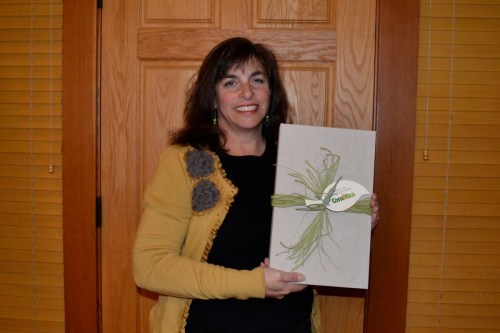
About suzlipman

Find more about me on:

Here are my most recent posts

Author Archives: suzlipman

Celebration of Fall

Where I live, we are ending what has been an unusually spectacular fall. Trees have been ablaze with color. There has been abundant water to satisfy the plants and enough crisp, clear days to enrich us humans. We’ve been walking, hiking, visiting farms, picking pumpkins, digging for potatoes, planting bulbs, collecting acorns and pinecones for crafts and display, and otherwise enjoying the beautiful scenery around us.

I hope your fall has treated you equally well and that winter holds more wonder, beauty and joy. Click on any photo to enlarge it.

I Won a Costa Rica Gift of Happiness!

What do you do when, out of the blue, you get an e-mail, inviting you and your family to visit the country the Happy Planet Index has rated Number One in national happiness? When the country is Costa Rica, you immediately picture lush rainforests, gleaming and growing under a canopy of bird calls and life, miles of gorgeous coastal beaches, and, yes, happy people in a mellow, ecologically sustainable, place. I’d heard about “pura vida”, the phrase that denotes the Costa Rican spirit, a “bounty of life”. People I’ve known who have spent time in Costa Rica tell me they can’t wait to return – for the natural beauty, spirit, adventure experiences, and ease.

I read and re-read the email from the Costa Rican Tourist Board I didn’t tell anyone about it or answer right away. The offer came because of my Slow Family blog readership and the alignment the Board felt with the blog’s message of slowing down and enjoying life with family and community. After all, the spokescreature for the Costa Rica’s Gift of Happiness Sweepstakes, which my prize is a part of, is a relaxed and happy sloth.

So many “offers” come by email and phone that I had trouble believing this one. I googled “Gift of Happiness”, liked the Gift of Happiness Facebook page, and made a tentative call to the number on the email, where a very friendly person on the other end of the phone told me that the trip was part of the Costa Rica’s Gift of Happiness program, which is giving away $1,000,000 worth of trips in the next few months (a trip each weekday) to help North Americans experience Costa Rica’s spirit.

The consultant detailed our (!) trip, one of six themed experiences — the 8-day, 7-night Family Happiness package, in which our whole family would stay in three CST-rated (Certification for Sustainable Tourism) hotels in three distinct regions in Costa Rica (Sarapuiqi, Monteverde and Matapalo Beach). Transportation and all kinds of fun family side trips and adventures, from visiting coffee plantations to walking on hanging bridges over the Cloud Forest, would be included. All so we could experience our own Costa Rican “pura vida”, in the happiest place on Earth.

What does one say to that? YES!

Things moved quickly. Family members checked calendars and watched a video of Anderson Cooper sending a surprised pair of honeymooners on their own Gift of Happiness (the Romantic Happiness package, no doubt), just to be extra, super sure this thing was real. I was sent a beautiful wooden certificate for the trip and put in touch with a travel consultant.

The trip is a dream come true. I’ve always wanted to visit Costa Rica with my family. And now we’re going! I will be sure to blog all about our adventures.

Read what another happy winner, Lindsay at Eco-Chick Escapes, writes about her trip and the great things she discovered about Costa Rica’s happiness rates and sustainable practices.

Read more about the Happy Planet Index, which measures countries based on a  matrix of environmental impact and physical and psychological well-being to illustrate that high levels of resource consumption do not reliably produce high levels of well-being. (In other words, simplifying can lead to happiness.)

Enter to win your own Costa Rica’s Gift of Happiness trip by “liking” the Gift of Happiness Facebook page.

Photos: Costa Rican Tourist Board, Lipman Family

Tulips are in the Ground!

My family and I love tulip-planting time. We have many memories of going out on bright and chilly late November or early December days, digging into the dirt and placing our bulbs into the ground, along with our visions of colorful and elegant tulips coming up in the spring.

The big bulbs (and, of course, the gorgeous flowers) make tulips especially fun and easy for kids to plant and then watch emerge from the ground, sometimes among the first flowers to do so after the winter. Kids usually enjoy learning that the bulbs have most of the nutrients inside to create a flower (but still like a little boost at planting time – we use an organic bulb food.) This makes bulbs a great item to plant in school yards or public spaces because they don’t need a lot of watering or care while they’re growing.

Because we live in Sunset Magazine’s gardening zone 17 (USDA Zone 9), we refrigerate our bulbs for 6 weeks to simulate a Northern winter. And, because we haven’t had much success preserving our tulips from year to year (see the next paragraph for ideas about that), we always have some new tulips to try. Of course that’s a big part of the fun – poring over web sites and practically drooling over the local nursery displays. The chosen bulbs then go into the fridge for their hibernation. And, on an invariably cold, crisp day — in 6″ deep holes (aided by a simple bulb digger) and with a little organic fertilizer (the white stuff you see) — into the ground they go. We used sticks to mark different color bulbs while we were planning our planter boxes.

Because tulip bulbs are generally indicated to bloom early, mid or late spring, you may want to choose bulbs that bloom at about the same time (which we did, because we have a small planting area) or choose bulbs for continuous blooms. Heights are also estimated so that you can plant taller ones in the back of a display.  Tulips tend to look best grouped, rather than in a line.

Want to know more about bulbs and planting? The Blooming Bulb site sells bulbs and offers more detailed tulip planting and storing instructions. The Plant Expert is a fabulous resource about choosing, planting, storing and growing bulbs and all kinds of plants. Another is Doug Green’s Flower Garden Bulbs, which sells bulbs as well. Colorblends (which offers more great planting information), Brent and Becky’s Bulbs and K. VanBourgondien and Sons also sell wonderful selections of bulbs throughout the year by mail order. I also recently found an article about storing bulbs for use the next year, which the writer says is a good idea in any garden where the bulbs will be planted over, not just our warm-winter gardens. I think we will try these new techniques this year!

So, what did we plant?

Come drool with us!

DAYDream

Of our four different tulips, one was brought back from two years ago, the lovely Daydream. A Darwin hybrid, the Daydream is a classically shaped tulips in a soft apricot color, with with a little color variation for interest. The flower height ranges from 20”-24”. I found the stem to be nice and sturdy, and the bulb a pleasing size and perfect color. Some of the flowers tended toward pale yellow tones. Daydreams open in the sun to reveal a black center.

Darwin Hybrids were originally cultivated by crossing single late Darwin and Cottage tulips with early Fosteriana tulips to produce beautiful results.

Salmon Impression

Salmon Impression is another in the sherbet-like color range that I like. A Darwin Hybrid, like the Daydream, we’re told the Salmon Impression is especially sturdy and does well in various climates and conditions, as well as producing large, pretty flowers on strong stems that reach 20-24″.

Ivory Floradale

I think a light or dark accent color is nice among the tulips. This year we went for the light and creamy colored Ivory Floradale. It’s another Darwin Hybrid (I guess we know what we like) and is said to grow to 20-22″ on a strong stem.

china town

We usually try to plant one especially exotic tulip – one with frilly edges, or flames of color shooting through it, or a Viridiflora, a tulip type that offers streaks of stem-like green along its flower. This year’s is the China Town. Writes Bissett Nursery: “Flaring petals of pink, edged in cream streaked with a moss green.  Artistic and unusual in design.  China Town also has especially attractive foliage – dark green leaves with white borders.” This flower is said to grow 14-20″ and is in its own pot in a very visible spot.

Photos: Daydream: Susan Sachs Lipman; Salmon Impression: Botanus; Ivory Floradale: Van Bourgondien Nursery; China Town: Bissett Nursery. All others: S. Lipman

More Tulipmania from Slow Family:

Tulipmania 2010, Part One (Lots of tulip photos)
Tulipmania 2010, Part Two (More tulip photos)
Tulipmania: One Bubble I can Really Get Behind


Look Up! It’s the Geminid Meteor Shower

Now playing overhead: The dramatic Geminid Meteor Shower, which many astronomers agree is the best meteor shower of the year.

The Geminid Meteor Shower is forecast to peak late Tuesday/early Wednesday Dec. 13-14, between around 10 p.m. and sunrise, at your local time, in North America. If you can’t stay up that late, not to worry — astronomers tell us that some meteors should be visible as soon as darkness hits. In addition, the shower lasts for days before and after the peak date, and there have already been reports from around the world of people spotting spectacular fireball-like celestial streaks.

Despite this year’s nearly full moon, NASA scientists, like Bill Cooke of the NASA Meteoroid Environment Office, still predict a good show. “Observers with clear skies could see as many as 40 Geminids per hour,” Cooke says .  “Our all-sky network of meteor cameras has captured several early Geminid fireballs.  They were so bright, we could see them despite the moonlight.”

What is a meteor shower?

Meteors occur when the Earth passes through streams of dust and debris from ancient comets which have entered the Earth’s atmosphere. (When the comet has flown close to the sun, its dirty ice evaporated and that, in turn, caused the comet dust to spew into space.) Scientists believe that the Geminids actually come from an asteroid, called 3200 Phaethon, which is really the skeleton of an extinct comet. The Earth passes through this particular debris stream each December, and is said to originate near the constellation Gemini.

How to watch the Geminid Meteor Shower

The Geminids should be visible with the naked eye in North America and perhaps in other parts of the world. Sky watchers in cold climates should bundle up, grab a chair (ideally one with some neck support), and perhaps a blanket, head outside where you can see the largest patch of night sky possible (with as little city light as possible), and look up.

Because meteor showers last for days before and after the projected peak, be sure to scan the skies during the surrounding days, if you can. This time of year, clouds can obscure the Geminids on the peak day, as can the moon, which will be nearly full.

A thermos of hot chocolate is a great accompaniment for the Geminids.

This shower has been getting stronger every year it’s been recorded, going back the the 1860s. It could be “an amazing annual display”, according Cooke of

This American Meteor Society page is a great site for exploring more about the Geminids and where and when to see them in your local night sky.

This movie of the 2008 Geminids comes from a space camera at the Marshall Space Flight Center:

Watch the 2008 Geminid Meteor Shower

12 Days of Green Holiday Gifts: Gifts That Help Others

Updated December 21, 2012

Last year, my family gave me a cow for my birthday. I never got to see it, but it was one of the best gifts I’ve ever received. The cow helped its recipient family, which may be anywhere on the globe, in multiple ways. Milk from the cow offered nutrition to the family and neighbors and was sold to support the family and buy needed food and supplies for a larger circle. Calves from the cow were given or sold to others in the town or village, so that they too could be nourished and supported. The cow was bought through Heifer International, which offers gifts of sheep, goats, chickens, pigs and other animals and resources, to help people worldwide achieve hunger relief, self-sufficiency and income by becoming trained in farming skills. My family chose the cow for me because it seemed the most directly nourishing. I was extremely pleased and moved to be part of such a beautiful and empowering gift from an organization that has made a big impact using a simple model.

Read more stories about Heifer. They offer gifts at many levels and opportunities to get involved.

Looking for other groups to support with a gift? There are a great many organizations doing wonderful work. The following are just a few. Think about the recipient and something that would have meaning for him or her. (Please send your suggestions for more, especially those outside the U.S., so we can learn about them.) Also be sure to take these steps to research any group before donating:

Here are some organizations that have crossed my radar and are doing good work.

Children & Nature Network

Full disclosure: I work for these folks. I wouldn’t do it if I didn’t believe heartily in their mission of building an international movement to connect all children, their families and communities to nature. In an age when many children are deprived of school recess, let alone nearby yards, parks and woods, it seems essential for their future physical, psychological and spiritual health, and the health of the planet, that we support those working to reconnect children and people with the green spaces around them. C&NN does this by providing the latest research and resources to parents, teachers, urban and playground planners, health care professionals, nature professionals, and those working at the grassroots level to enact change.

Big Brothers Big Sisters of America

An incredible number of children, particularly those at risk, cite the lack of a caring adult in their lives. For more than 100 years, BBBS has been providing and supporting long-term, caring adult mentors to youth ages 6-18, in communities across the U.S. The carefully administered one-on-one relationships between the “Bigs” and the “Littles” has changed many lives, in terms of confidence and personal and academic achievement.

First Book

First Book provides access to new books for children in need, sometimes the first book a child will ever have. Expanded to include online content and other educational resources, First Book has distributed more than 85 million books and materials to programs and schools serving children from low-income families throughout the U.S. and Canada. Judging by its ratings, it’s an exceptionally well-run non-profit with an admirable track record and goal.

National Trust for Historic Preservation

Many historic homes and sites, neighborhood schools and public lands are in danger of being lost forever to development. Their loss can affect more than aesthetics and character — communities and livelihoods, resources and aspects of America’s rural and cultural heritage are destroyed as well. The THP brings awareness and considerable public-policy muscle to saving endangered sites. The group also works to rebuild neighborhoods after natural disasters and to revitalize communities using smart growth and sustainable practices.

American Farmland Trust

About an acre of American farmland is lost every minute. Family farms are in grave danger, from factors ranging from corporate farming to unsustainable development that results in the paving over of farms for roads, housing tracts and malls. American Farmland Trust works with legislators, communities and farmers to protect America’s farm and ranch land; promote environmentally sound farming practices, clean air and water, and a healthy food supply; and ensure an economically sustainable future for farmers and ranchers.

Your or Recipient’s Local Land Trust

Many areas have land trusts, which work to purchase and preserve land for the enjoyment, recreation, habitat preservation or agricultural use of future generations. A donation to a local land trust makes a wonderful and thoughtful gift. The Land Trust Alliance has a list of accredited land trusts.

National Wildlife Federation

NWF works to protect wildlife and wild spaces in the U.S., for everyone’s enjoyment and health. They are actively working at the public policy level to expand clean energy, reduce our dependence on oil, and improve our relationship to the natural world through areas like health and urban planning. They provide resources and education about the many ways families can enjoy nature, through programs like their popular Certified Wildlife Habitat, which allows people to nurture and learn about animals and the ecosystem in their own backyards.

Teens Turning Green

Started by students a few years ago, TTG has grown into a national movement devoted to education and advocacy about environmentally and socially responsible choices for individuals, schools, and communities. The group promotes global sustainability by identifying and working to eliminate toxins that threaten public and environmental health. At the same time, it empowers young women and men to lead and advocate.

Looking for more?

My Slow Family Resource List offers still more wonderful groups who are working to help create a rich, just and sustainable world for children, families and communities, such as The Center for Ecoliteracy, Edible Schoolyard, the National Park Trust and many more.

This list of 25 Top Children’s Charities includes many well-known ones and some you may not know, that I think are doing great work, including KaBOOM!, CASA, Children’s Defense Fund and Locks of Love.

The Good Human lists wonderful Green Charities who are doing great work, including the David Suzuki Foundation, Earth Justice, The National Resources Defense Council, and The Center for a New American Dream.

Mother Nature Network offers a list of Green Charities that features Earth Island Institute, The Sierra Club Foundation, the California State Parks Foundation, which desperately needs our help this year to prevent park closures, and the only group to make both “Green” lists, The Nature Conservancy.

And, now you can even give the gift of giving! I recently learned about Charity Checks, which allows you to order blank checks for recipients or even for your own family. Recipients receive checks in the denominations of your choice, and then they get to choose their own charities. The entire face value of the check goes to that charity. No money goes back to Charity Checks. This unique organization was the brain-child of Lisa Sonne and Victor Dorff. Not only is the structure of their organization highly unusual (a charity whose sole purpose is to funnel funds to other charities), it can have a powerful and tangible impact on families and children. Explains Lisa Sonne in Huffington Post:

You really get to watch the kid think about something that never has occurred to him or her before. There’s a certain empowerment there. It’s one thing to say, ‘What do you care about?’ when it’s abstract. But if you say to a kid, ‘Okay, here’s $25. Do you want to save a puppy’s life? Feed a hungry person? Buy a book for the library?’ Suddenly, the kids find themselves thinking about things they never thought about before.

Gifts that help others work in so many profound ways. They are truly the ultimate gifts.

Friesian Holstein Photo: Keith Weller. Bear Photo: Charity Checks.
Other photos: Susan Sachs Lipman

Slow News Day: Hooray for Low-Tech Toys

Last January Wired Magazine ran a story on the Five Best Toys of All Time. Which toys did the high-tech, gadget-and-gizmo friendly magazine (or at least the Geek Dad section) name as the best? The stick, the box, string, the cardboard tube, and dirt. Not an electronic toy in the bunch. And, even more, all of these are simple, available (if not free), and provide open-ended play. Two are found in nature.

The internet went nuts with this story, as person after person — parents, teachers, nature advocates, play experts, and people who simply sense that today’s children grow up too quickly — passed this story around. With all the holiday advertising and shopping, and all the craze for the flashiest and the latest, a writer was advocating that kids go play in the dirt.

When Anna was small, I noticed that she was happy for hours with simple things — dirt, water, grass, a tire swing, paper, scissors, glue. She spent about a year being fascinated with adhesive tape — pulling, cutting and laying it down on paper, creating cardboard box-and-tube cameras and “candy machines”.  She didn’t seem to need or want anything more expensive, complicated or “educational” than that. I’ve found this is often the case if we slow down, adjust our ideas about what is normal or expected, and let our children and our own instincts guide us.

On the heels of the Wired story came another one: The Center for Early Childhood Education at Eastern Connecticut State University released the results of its 2011 TIMPANI (Toy to Inspire Mindful Play and Nurture Imagination) study. Each year they name a “best toy” based on three categories: thinking and learning; cooperation and social interaction; and self-expression and imagination.

This year’s winner? The nearly 10o-year-old Tinkertoy Construction Set. Said the study’s principal researcher, “Basic, open-ended toys tend to be more beneficial to children’s play and learning than some of the more elaborate and commercial toys that are on the market.” The Tinkertoy designers, after all, created their toy after seeing children play imaginatively with pencils and empty spools of thread.

The article goes on to point out that open-ended toys foster cooperation and communication, with peers as well as with parents:

Through play, you can provide your child with the support needed to learn and grow, to learn how to learn, and to get needs met in safe, appropriate ways.

I’ve often bonded through play and creating with my family, and I’ve seen scores of children be happier and more engaged when playing with open-ended toys.

You may also be interested in:
Children Opt for the Box Over the Toy
Movement to Restore Free Play Gains Momentum

Photo: Melissa Gutierrez

12 Days of Green Holiday Gifts: Butterfly Girl Dolls

I adore these Butterfly Girl Dolls from the Canadian company, Little Humbugs. Each of the cute 12″ plush dolls comes snuggled inside a chrysalis, the way a real butterfly is. It’s a great idea — The chrysalis provides further play, teaches about nature, and doubles as the dolls’ packaging as a way to cut down on waste. Each doll is cutely designed in a color-coordinated outfit and bright wings, and each has a nature-inspired story — Jasmine is a protector of nature, making sure animals and plants are safe; Chloe is a gardener, growing beautiful and healthy things in her organic garden; Lucy is a bird keeper, nurturing and spending time with her feathered friends; Nika is a gemstone collector, making beautiful things with found objects.

There’s even an eco superhero for boys, Flint the Dragonfly Boy, who is strong, mischeivous and courageous.

Little Humbugs also offers beautiful Butterfly Girl books, custom prints and colorful fair-trade felt beads.

Little Humbugs and Butterfly Girls are the creation of children’s book author and illustrator, Marghanita Hughes. Marghanita is passionate about connecting children to nature and encouraging them to enjoy and steward the Earth, as well as appreciate its magic. This is easily apparent in all she does, from creating a company and products that use resources consciously to share a gentle message about the Earth, to exploring the wonders of the outdoors with groups of young children through a series of nature workshops, videos and books. The Butterfly and Dragonfly dolls are lovely, made with heart, fun to play with, and devoid of the consumerist trappings that similar plush dolls include.

Photo: Little Humbugs

My criteria for a green holiday gift? One that :

Promotes nature play or care of the earth
Uses all or mostly natural ingredients
Fosters observation and/or open-ended active and creative play
Doesn’t use extraneous plastic or other wrapping
Doesn’t break the bank to buy it.

Got any suggestions? Send them my way!

Other Green Holiday Gifts:
Homemade Cookies
Root Viewer Garden Kit

12 Days of Green Holiday Gifts: Homemade Cookies

Cookies might be the ultimate green and well-received gift — They’re delightful, yummy and fun. They come from the heart. They’re economical. Making and exchanging them can be a fun holiday tradition. And you can always make a few extra for yourself.

Every holiday season I have the pleasure of attending a cookie exchange! Lucky me (and my family.) Each year the women who volunteer to help with my local Girl Scout group have an exchange in which attendees bring 4 dozen cookies and an empty container. The cookies all go out on a table, and we line up (Girl Scout volunteers are orderly) and go around the table, socializing and taking a cookie from each plate until they are all distributed. (A photo from a past exchange is above.)

There are several cookies that have become part of our holiday baking traditions. I usually manage to make a couple of types each year. They happen to be easy to make. Here are the favorites.

Spritz Cookies

I grew up making these every holiday season. My mom especially enjoyed making Spritz cookies and Halloween cupcakes. A certain whiff from an electric beater — she had a great, big Hamilton Beach one that sat permanently on the counter — takes me right back to childhood winters and falls.

Spritz cookies are made by pressing the soft dough through a cookie press and through various plates with interchangeable shapes. I love the efficiency and fun of pressing out lots of little cookies. Once pressed onto a cookie sheet, you can decorate them with the sprinkles of your choice. I think one of the keys to good Spritz cookies is: Be sure your recipe includes almond flavoring (or add 1/2 tsp. per 4-5 cups of dry ingredients, or half as much as your vanilla flavoring). The other is: Have fun decorating. This can be a very festive and delicious cookie. If you do color the cookies (which I recommend!) you might want to try professional paste frosting colors, which, with a little patience, produce a nice deep color. (You can get a box of 8 small color jars from ChefMaster, available at specialty baking stores, for around $7).

It also takes a little practice to learn to press the right amount of dough out per cookie. (Most presses have adjustable settings.) The good news is you can just scoop dough that didn’t work out back into the press and try again.

This site, from Wilton, offers the classic Spritz recipe, plus links for buying a cookie press. I recommend the reasonably priced Cookie Max.

Butterballs

You may know them as Mexican Wedding Balls, or Russian Tea Cookies. Butterballs are mine (and a lot of people’s) favorite cookie — They’re tasty, melt-in-your-mouth buttery, sugar-coated, and just all-around great, any time of year. I find the ones in The Silver Palate Cookbook to be the best of the best, perhaps because they’re largely sweetened with honey, which provides a great taste and crunch.

Here is the Butterball Cookie recipe, from The Silver Palate Cookbook.

Sugarplums

One more from the Silver Palate team — This one is in The Silver Palate Good Times Cookbook: Sugarplums. Mythical, festive, evocative Sugarplums. (As seen in The Nutcracker and The Night Before Christmas.) They are certainly as much fun to pop into one’s mouth as they are to contemplate. The original Sugarplum recipe calls for corn syrup and cognac. I substituted agave syrup, a mild and more natural sweetener for half the corn syrup, and all of the cognac (using a little under 1/3 c. for the cognac portion.) And I did away with the cherry on top, the better to enjoy the pure, undiluted Sugarplum experience.

Enjoy!

For gifting, wrap in cellophane or fabric and tie with ribbons, or place in jars or decorated bags. Or bring to gatherings on plates.

My criteria for a green holiday gift? One that :

Promotes nature play or care of the earth
Uses all or mostly natural ingredients
Fosters observation and/or open-ended active and creative play
Doesn’t use extraneous plastic or other wrapping
Doesn’t break the bank to buy it.

Got any suggestions? Send them my way!

Other Green Holiday Gifts:
Root Viewer Garden Kit

Photos by Susan Sachs Lipman

12 Days of Green Holiday Gifts: Root Viewer Garden Kit

I recently saw this wonderful toy and immediately got very excited about it. The Root Viewer Garden, from Toysmith, allows you to see what’s happening underground when you grow root vegetables like carrots, onions, radishes, and beets. And, best, it contains everything you need to grow your own root veggies and watch the show: a wooden tube holder; three 5 1/2” plastic tubes; growing medium; carrots, onion and radish seeds; instructions; and a journal for recording their progress from sprouting to harvest.

I’ve forced flower bulbs before, by growing bulbs in a water-filled bulb-forcing vase, but I think growing root vegetables in the Root Viewer’s tubes is far more visual, and therefore rewarding, for kids. With root vegetables, all the action is normally underground! Plus, there’s something about growing a food and learning about that process that is educational and stays with one for life.

Find Root Viewer Gardens at Home Training Tools or Wild Bird & Gifts. Or, make your own and spend time this holiday season enjoying it.

You’ll need:

Clear plastic cups, or bottles or jars
Seeds and dirt

Fill containers most of the way with dirt.
Plant root vegetables or quick-sprouting seeds, like beans, peas, lettuce, radishes, bachelor’s buttons, Sweet Alyssum, or Sweet William, close to one side, one or two per cup.
Place containers in the sun or on a sunny windowsill and water gently.
Watch as roots form and plants sprout.

My criteria for a green holiday gift? One that :

Promotes nature play or care of the earth
Uses all or mostly natural ingredients
Fosters observation and/or open-ended active and creative play
Doesn’t use extraneous plastic or other wrapping
Doesn’t break the bank to buy it.

Got any suggestions? Send them my way!

Photo Friday: What’s Growing?

Tootling along recently, not far from my home, I came upon this very whimsical creation. Is it art? Is it nature? Could pumpkins and gourds really be growing from that tree?

Cheers to all those who take a moment to provide a bit of whimsy for themselves and others and, in doing so, make the world just a little more joyful, meaningful and fun!

Have you seen and photographed something unusual, whimsical, beautiful, or otherwise interesting in your travels? Has anything surprised you or caused you to pause? Or have you simply experienced a small, lovely moment that you wanted to capture? If so, I hope you’ll share with us by leaving a comment with a link to your photo. I look forward to seeing it!


Photos by Susan Sachs Lipman

You may also be interested in:

Photo Friday: Empire State
Everyday Whimsy: Two Reminders that the Mundane can be Made Fun
Postcards Between Poles: Spot of Whimsy


Related Posts Plugin for WordPress, Blogger...